Former Bank of England Analyst: Alien Disclosure Could Spark a Bitcoin Surge

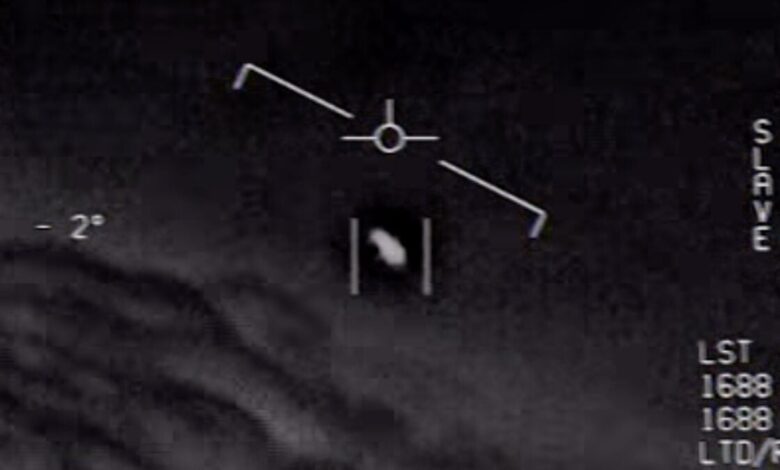
As reported by the Sunday Times, a former Bank of England (BoE) analyst has urged the UK’s central bank to prepare for the possible public confirmation of extraterrestrial life by the Trump administration in the United States. The analyst, Helen McCaw, who previously worked in financial security at the BoE, contacted Governor Andrew Bailey to warn that such a revelation could trigger an unprecedented economic shock.
McCaw’s background includes developing contingency plans for hypothetical financial crises, scenarios she now believes could become relevant if a full-scale alien disclosure were to occur.
Data from prediction market Polymarket suggests that the idea of disclosure is no longer viewed as pure science fiction. The market currently assigns a 12% probability to the U.S. confirming the existence of aliens before 2027, though trading volume remains relatively low.
In recent years, a growing number of senior government officials have publicly discussed the UFO, now commonly referred to as UAP phenomenon. This trend culminated in appearances by figures such as Secretary of State Marco Rubio, former Director of National Intelligence James Clapper, and Senator Kirsten Gillibrand in the documentary the Age of Disclosure. The film’s director, Dan Farah, has stated that he believes it is only a matter of time before a sitting U.S. president makes an official announcement.
McCaw argues that confirmation of non-human intelligence could lead to widespread “ontological shock,” disrupting public perceptions of reality and authority. Because of this, she believes financial institutions should begin preparing now. the Age of Disclosure also claims that former U.S. Treasury Secretary Steve Mnuchin was once briefed on the topic of extraterrestrials amid similar economic concerns.
“Financial markets could experience extreme volatility driven by panic or exuberance, along with a breakdown in confidence if investors no longer know how to value assets using traditional models,” McCaw reportedly wrote. “If an announcement is made with clear, indisputable evidence, I believe we could see total financial instability within hours.”
In her letter, McCaw outlined several possible outcomes following disclosure. One scenario involved investors fleeing to bitcoin as a perceived safe haven, particularly if trust in governments and established institutions were to erode.
“There could be a surge toward digital currencies like bitcoin, especially if people begin to doubt the legitimacy of government and lose confidence in state-backed financial assets,” McCaw wrote.
She also explored two contrasting possibilities for gold, bitcoin’s traditional analog counterpart. On one hand, gold could benefit from increased demand as a store of value. On the other, fear could enter the market if advanced space-faring technologies dramatically expand the supply of precious metals through extraterrestrial mining operations.
The idea that gold could eventually face devaluation due to space-based mining is a frequent talking point among bitcoin advocates. It was notably raised by the Winklevoss twins during their well-known debate with Barstool Sports founder Dave Portnoy several years ago. While asteroid mining is currently considered economically impractical, NASA did launch a mission to study a metal-rich asteroid in 2023.
Bitcoin, however, is protected from sudden supply shocks by its difficulty adjustment algorithm (DAA), which automatically increases mining difficulty as more computing power joins the network. This mechanism prevents a rapid expansion of supply. The more significant long-term risk to Bitcoin’s monetary policy may come from social attacks, where users are persuaded to migrate to alternative networks that remove the 21 million coin cap. While quantum computing could also pose a future threat, developers are already exploring upgrade proposals that could be deployed if needed.